Last updated: 1 Nov 2026
Gallstones are very common, and most people who have them never know.[1][2] Problems usually start only when a stone blocks one of the small tubes that carry bile, which can cause sudden, severe pain in the upper tummy. That pain is easy to mistake for "gastric" or indigestion. This guide explains what gallstones are, the gallstones symptoms to watch for, how gallstones are diagnosed and the main treatment options, including when surgery is advised.
What are gallstones?
The gallbladder is a small, pear-shaped organ under the liver, in the upper right part of the tummy. It stores bile, a digestive fluid made by the liver, and releases it into the small intestine when you eat to help digest fat.[2]
Gallstones are hard, pebble-like pieces that form in the gallbladder. They can be as small as a grain of sand or as large as a golf ball, and you can have one stone or many.[2] There are two main types:[2]
- Cholesterol stones, made mostly of hardened cholesterol. These are the most common type.
- Pigment stones, which are darker and made of bilirubin, a substance formed when red blood cells break down.
Gallstones may form when bile contains too much cholesterol or bilirubin, or not enough bile salts, or when the gallbladder doesn't empty properly.[3] The medical name for gallstones is cholelithiasis.[2]
Who is more likely to get gallstones?
Anyone can develop gallstones, but they are more likely if you:[1][2]
- are over 40, as the risk rises with age
- are a woman
- have a family history of gallstones
- are overweight or living with obesity
- have a diet high in fat and low in fibre
- have lost weight quickly, for example after weight-loss surgery or a very low-calorie diet
- have certain conditions, such as diabetes, Crohn's disease or cirrhosis of the liver.
Gallstones in women
Women are more likely than men to develop gallstones. Extra oestrogen, for example during pregnancy or from hormone replacement therapy or birth control pills, is thought to raise the amount of cholesterol in bile.[2] If you're pregnant and have upper tummy pain, tell your doctor, as several conditions can cause it.
Gallstones symptoms
Silent gallstones
Most gallstones don't cause any symptoms. These are called "silent" gallstones and are often found by chance during a scan for another reason.[1][3] Silent gallstones don't stop the gallbladder, liver or pancreas from working and usually don't need treatment.[3]
Biliary colic (a gallbladder attack)
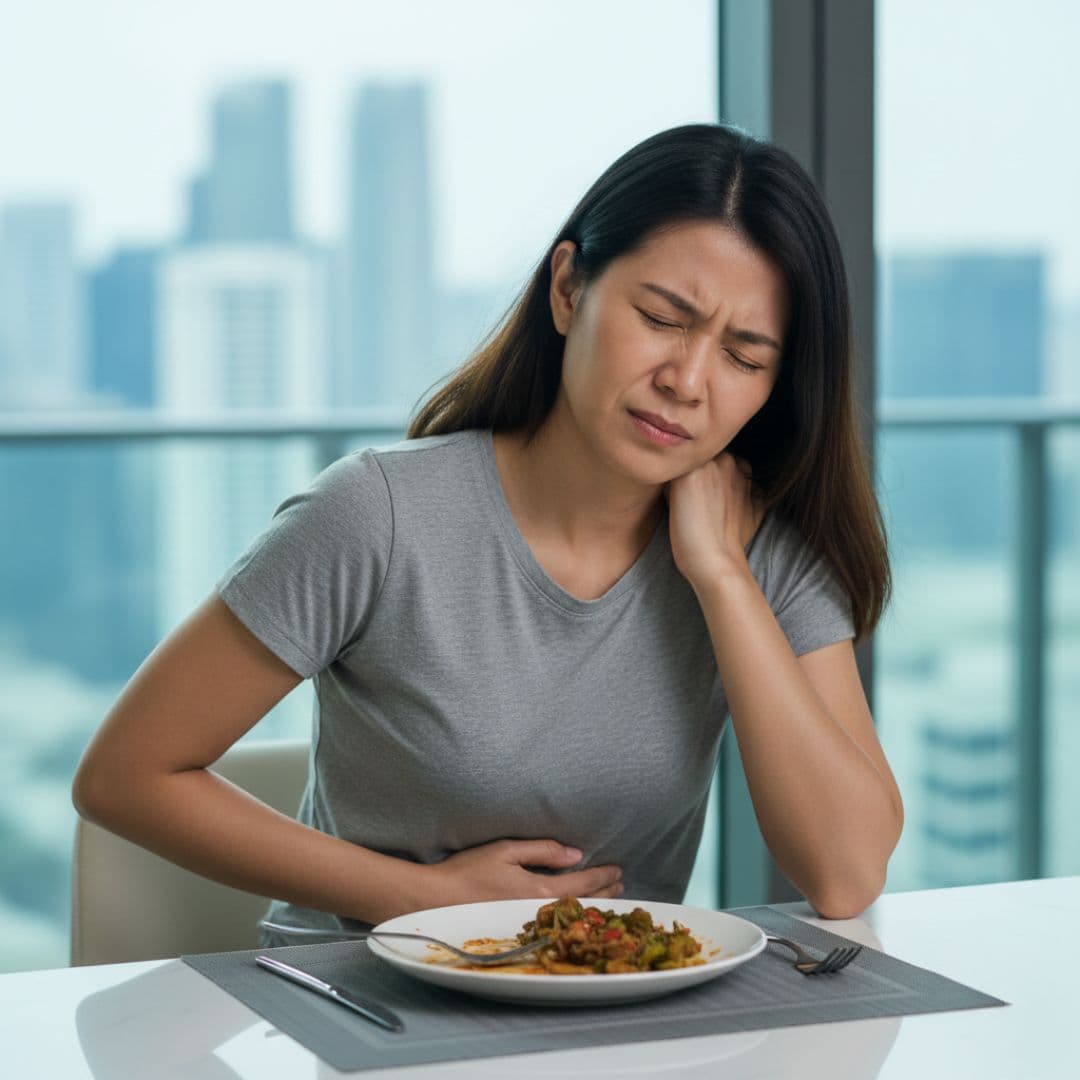
When a gallstone blocks a bile duct, it can cause a sudden attack of pain called biliary colic.[1][3] The pain:[1][3]
- is usually in the upper right part of the tummy, just under the ribs, or in the middle of the upper tummy
- can be severe and constant, sometimes lasting several hours
- may spread to the back or the right shoulder blade
- often comes after a heavy or fatty meal, and often in the evening or at night
- may come with nausea or vomiting.
The pain usually eases when the stone moves and the duct is no longer blocked. But if you've had one attack, more are likely to follow.[3]
Gallstone pain can feel like other conditions, such as acid reflux, a stomach ulcer, pancreatitis or appendicitis, so it's important to get it checked rather than assume it's "gastric".[3] Our articles on GERD and acid reflux and stomach ulcers explain those conditions.
Warning signs of complications
If a duct stays blocked, gallstones can lead to serious complications, including:[1][2][4]
- inflammation or infection of the gallbladder (acute cholecystitis)
- a blocked or infected bile duct
- inflammation of the pancreas (gallstone pancreatitis)
- jaundice, where the skin or whites of the eyes turn yellow, with itchy skin, dark urine and pale stools.
Seek urgent medical help, by calling 995 or going to the nearest Emergency Department, if you have:[1][3]
- sudden, severe tummy pain, or tummy pain lasting several hours
- pain that spreads to your back with vomiting
- a fever, chills or shivering
- yellowing of your skin or the whites of your eyes
- tea-coloured urine and pale stools.
If yellowing of the skin is your main concern, our article on the signs of liver disease explains other causes of jaundice.
Gallstone diagnosis
A gallstone diagnosis starts with your doctor asking about your symptoms, your medical and family history and what you usually eat, and examining your tummy for tenderness.[5] Tests may include:[1][5]
- Blood tests, to look for signs of infection or inflammation of the gallbladder, bile ducts, pancreas or liver.
- Abdominal ultrasound, the main imaging test for finding gallstones. It uses sound waves and is painless.
- CT scan, which can show complications such as infection or a blockage, although it can miss some stones.
- MRI (MRCP), which can show stones in the bile ducts.
- HIDA scan (cholescintigraphy), which shows how bile moves and can reveal a blocked duct or a gallbladder that isn't contracting properly.
- ERCP (endoscopic retrograde cholangiopancreatography), which combines an endoscope passed through the mouth with X-rays. Because it is more invasive, it is used selectively, usually to remove a stone stuck in the common bile duct.[5]
Gallstone management and treatment
Gallstone management depends on whether the stones are causing symptoms or complications, and where they are.[1][6]
No symptoms: often no treatment
If your gallstones aren't causing symptoms, you probably don't need treatment.[1][6] Your doctor may simply ask you to watch for symptoms and come back if they appear.[1]
Gallbladder surgery (cholecystectomy)
If gallstones are causing symptoms or complications, the usual treatment is surgery to remove the gallbladder, called a cholecystectomy.[1][6] You can live normally without a gallbladder: bile simply flows from the liver straight into the small intestine instead of being stored first.[6][7]
Most cholecystectomies are done as keyhole (laparoscopic) surgery through a few small cuts in the tummy. Open surgery through a larger cut is sometimes needed, for example if the gallbladder is badly inflamed or scarred.[6][7] Gallbladder surgery in Singapore is carried out by a surgeon, so if you need an operation, you'll be referred to one. Your doctors will explain what to expect and how to prepare.
Some people have softer or more frequent stools after their gallbladder is removed, which usually settles.[6] As with any surgery, there are risks, including injury to the bile ducts, bleeding and infection, which the surgeon will discuss with you.[6][7]
Stones in the bile duct: ERCP
If a stone is stuck in the common bile duct, it may be removed with ERCP. An endoscope is passed through the mouth and stomach to the opening of the bile duct, which can be widened so the stones can be cleared.[1][6] ERCP is often followed by removal of the gallbladder.
Non-surgical options
Medicines that dissolve gallstones, or shock wave treatment to break them up, are used only rarely, for example for small cholesterol stones in people who can't have surgery. Gallstones can come back after these treatments.[6]
While you wait for treatment
While waiting for surgery, your doctor may advise pain relief and a lower-fat diet, and suggest avoiding foods that seem to trigger your symptoms.[1]
Can you prevent gallstones?
You can't change risk factors such as age, sex or family history, but you may lower your chance of gallstones by:[6]
- eating more high-fibre foods and healthy fats, and fewer refined carbohydrates and sugary foods
- losing weight gradually if you're overweight, rather than very quickly
- keeping to a healthy weight through regular physical activity.
These steps also support liver health. Our article on fatty liver explains how weight and diet affect the liver.
When to see a doctor
See a doctor if you have repeated episodes of upper tummy pain, especially after meals, or if you've been told you have gallstones and are unsure what it means for you. Seek urgent care for the warning signs listed above.[1][3]
Gallstone symptoms and gallstone diagnosis are among the gut and liver conditions covered by the Gastroenterology and Liver Clinic Services of Dr Ling Khoon Lin, a gastroenterologist at Mount Elizabeth Medical Centre, with referral to a surgeon where an operation is needed. Questions about tests, preparation or next steps are covered at the consultation; you can send them through our contact form or request a consultation with the appointment form.
Frequently asked questions
What are the first symptoms of gallstones?
Many people have no symptoms. When symptoms happen, the most common is sudden, severe pain in the upper right or middle of the tummy, often after a heavy meal, sometimes with nausea or vomiting.[1][3]
Where is gallstone pain felt?
Usually in the upper right part of the tummy, just under the ribs, or in the middle of the upper tummy. It may spread to the back or the right shoulder blade.[1][3]
Do all gallstones need treatment?
No. Gallstones that don't cause symptoms usually don't need treatment. Treatment is usually advised if they cause symptoms, complications or are found in the common bile duct.[1][6]
How are gallstones diagnosed?
Usually with blood tests and an abdominal ultrasound. Other scans, such as CT, MRI or a HIDA scan, may be used in some cases, and ERCP is used mainly to remove stones from the bile duct.[5]
Can gallstones go away without surgery?
Gallstones don't usually go away on their own. Medicines to dissolve them are used only in special situations, work mainly on small cholesterol stones and the stones can return.[6]
Can I live normally without a gallbladder?
Yes. The gallbladder isn't an essential organ. After it's removed, bile flows directly from the liver into the small intestine. Some people notice softer stools, which usually settle.[6][7]
When is gallstone pain an emergency?
Get urgent help if the pain is sudden and severe, lasts several hours, comes with a fever or chills, or if your skin or eyes turn yellow or your urine turns dark.[1][3]
Sources
- NHS. Gallstones. https://www.nhs.uk/conditions/gallstones/
- National Institute of Diabetes and Digestive and Kidney Diseases (NIDDK). Definition & Facts for Gallstones. https://www.niddk.nih.gov/health-information/digestive-diseases/gallstones/definition-facts
- NIDDK. Symptoms & Causes of Gallstones. https://www.niddk.nih.gov/health-information/digestive-diseases/gallstones/symptoms-causes
- NHS. Acute cholecystitis. https://www.nhs.uk/conditions/acute-cholecystitis/
- NIDDK. Diagnosis of Gallstones. https://www.niddk.nih.gov/health-information/digestive-diseases/gallstones/diagnosis
- NIDDK. Treatment for Gallstones. https://www.niddk.nih.gov/health-information/digestive-diseases/gallstones/treatment
- NHS. Gallbladder removal. https://www.nhs.uk/conditions/gallbladder-removal/
Need to see a specialist? Book a consultation with Dr Ling Khoon Lin at Mount Elizabeth Medical Centre.
make an appointment