Last updated: 29 Oct 2026
Fatty liver means extra fat has built up in the liver. It's very common, it often causes no symptoms, and many people only find out about it after a blood test or scan done for another reason.[1][2] For most people, fatty liver doesn't cause serious problems, and healthy lifestyle changes can reduce the fat. In a smaller number of people, though, it can lead to inflammation and scarring of the liver, so it's worth understanding what a fatty liver result means and what you can do about it.[1][3]
What is fatty liver?
A healthy liver contains a small amount of fat. Fatty liver (hepatic steatosis) is when too much fat builds up in the liver cells.[2] There are two main causes:
- Non-alcoholic fatty liver disease (NAFLD), now also called metabolic dysfunction-associated steatotic liver disease (MASLD). This is fat build-up that is not caused by heavy drinking. It's closely linked to excess weight, type 2 diabetes and other metabolic conditions.[1][3]
- Alcohol-related fatty liver, caused by drinking too much alcohol. Some people have both causes at once.[4]
The newer name, MASLD, reflects the strong link with metabolic health. You may see either name on reports or in articles. They describe the same condition.[1][3]
NAFLD and MASLD: the stages
Doctors describe NAFLD/MASLD in stages:[1][3]
| Stage | What it means |
|---|---|
| Simple fatty liver (MASL, formerly NAFL) | Fat build-up with little or no inflammation or liver damage. This is the most common stage. |
| Steatohepatitis (MASH, formerly NASH) | Fat has caused inflammation and damage to the liver cells. |
| Fibrosis | Ongoing inflammation leaves scar tissue, though the liver usually still works well. |
| Cirrhosis | Severe, permanent scarring that affects how well the liver works. It can lead to liver failure or liver cancer. |
Most people with fatty liver stay at the first stage. Only a small number progress to inflammation and scarring, and lifestyle changes can help prevent this.[1][3]
Fatty liver symptoms
Fatty liver is often called a silent condition. Most people have no symptoms, even in the later stages.[1][4] When symptoms do happen, they can include:[1][4]
- feeling tired
- discomfort or a dull ache in the upper right side of the tummy, under the ribs.
If fatty liver progresses to cirrhosis, other signs can appear, such as yellowing of the skin and eyes (jaundice), swelling of the legs or tummy, and itchy skin. Our article on signs of liver disease explains these in more detail.
Because symptoms are uncommon, knowing your risk matters more than waiting for symptoms.
Who is at risk?
Fatty liver is more likely if you:[1][4]
- are overweight, especially with extra fat around the waist
- have type 2 diabetes or insulin resistance
- have high blood pressure
- have high cholesterol or high triglycerides (a type of fat in the blood)
- have metabolic syndrome, a group of conditions that includes several of the above
- are not very physically active or often have sugary food and drinks.
Fatty liver becomes more common with age, and genes play a part too.[4] Research shows it's common among people of East Asian and South Asian descent, and on average Asian people with fatty liver have a lower body weight than others with the condition.[3] So a "normal" weight doesn't rule it out.
How doctors check for fatty liver
There's no single fatty liver test. Doctors use your history, an examination and a combination of tests.[2][5] A doctor will usually ask about your health, medicines and how much alcohol you drink, and check your weight, height and waist size.[2][5]
Blood tests
Liver blood tests may show raised liver enzymes, such as ALT and AST, which can be a sign of fatty liver. Normal results don't rule it out, though.[5] Doctors may also use results from routine blood tests to calculate a score, such as FIB-4, that helps identify or rule out advanced scarring.[5] Other blood tests check for different causes of liver problems, such as viral hepatitis. Our article on hepatitis B screening covers one of these.
Imaging and liver stiffness
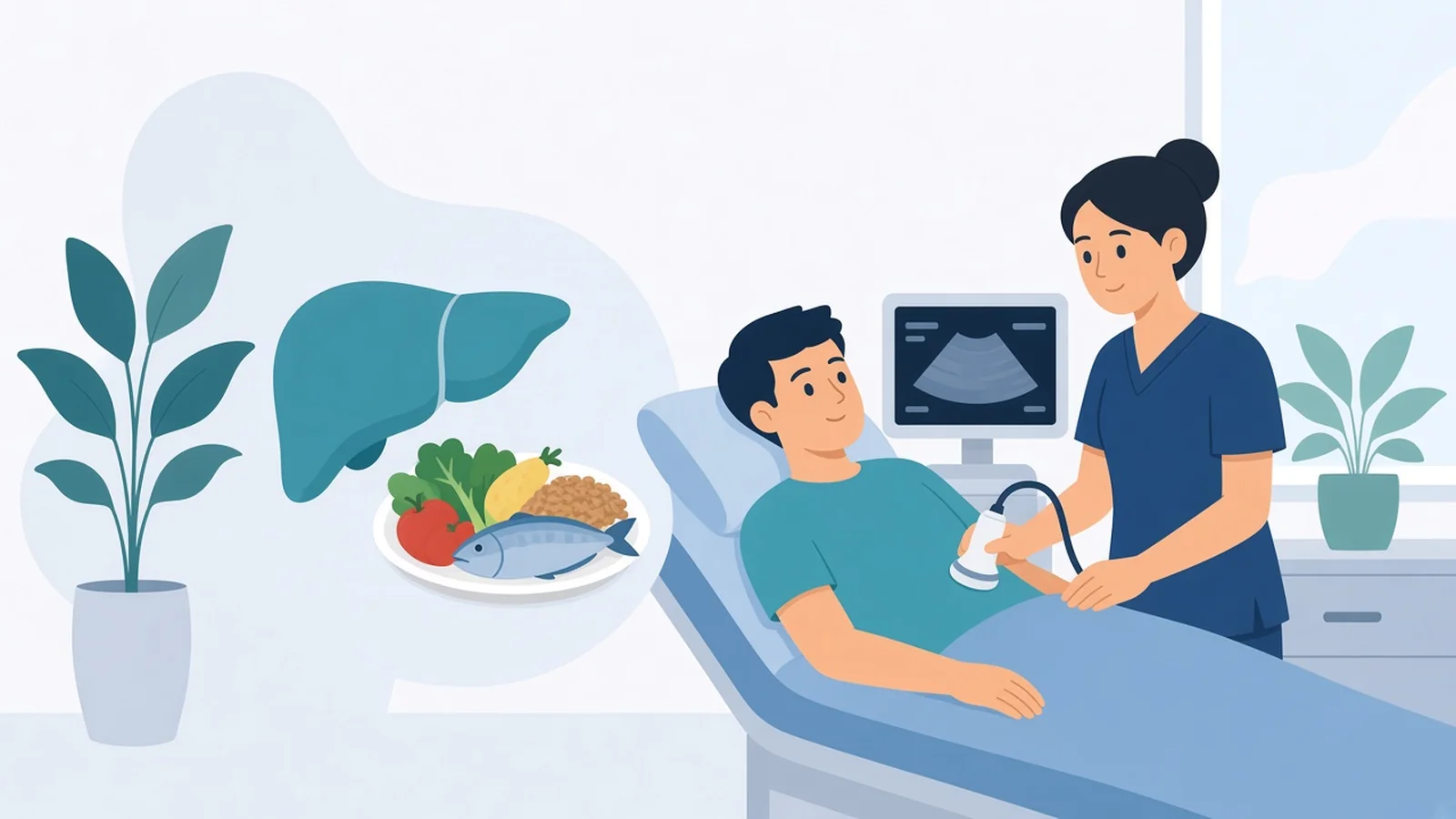
- Ultrasound is a common first scan and can show fat in the liver. Routine scans can't show whether there is inflammation or scarring.[5]
- Elastography measures how stiff the liver is. A stiffer liver can be a sign of scarring (fibrosis). It can be done with a special type of ultrasound, such as transient elastography, or with MRI.[5][6]
- CT or MRI scans may be used in some cases.[5]
Liver biopsy
A liver biopsy, where a small piece of liver tissue is taken and examined under a microscope, is the only test that can confirm steatohepatitis and show how severe it is. It isn't needed for everyone, and is usually considered when other tests suggest more advanced disease or another liver condition.[5]
Your doctor will explain which tests are suitable for you. Details such as how to prepare for a scan and when results are ready are covered at your consultation.
Fatty liver diet and lifestyle
There's currently no medicine approved for everyone with fatty liver, so lifestyle changes are the main treatment.[1][3][7]
Losing weight gradually
If you're overweight, losing weight can reduce fat in the liver, and greater weight loss can also reduce inflammation and scarring. NIDDK notes that losing at least 3% to 5% of body weight can reduce liver fat, and up to 7% to 10% may be needed to reduce inflammation and fibrosis.[7] Doctors recommend losing weight gradually, because rapid weight loss can make liver disease worse.[7]
What to eat
A fatty liver diet isn't a special diet. It's a balanced pattern of eating that supports a healthy weight. Your doctor may suggest:[7][8]
- eating more vegetables, fruit, whole grains and other high-fibre foods
- choosing lower-glycaemic foods, such as brown rice or whole grains, more often than white bread, white rice and potatoes
- cutting down on sugary drinks, including soft drinks, sweetened tea and juices, and foods with added sugar
- replacing saturated fats with healthier fats, such as those in fish, nuts and olive oil
- watching portion sizes.
Physical activity
Being active helps the liver even without weight loss.[7] The NHS suggests aiming for at least 150 minutes of exercise a week.[1]
Alcohol and other habits
If you have fatty liver, keep alcohol low, since it can cause further damage.[8] Talk to your doctor before taking supplements or herbal remedies, as some can harm the liver.[7] Managing diabetes, blood pressure and cholesterol also matters, because fatty liver is linked with a higher risk of heart disease.[1][3]
If you have liver scarring, you'll usually need follow-up with a specialist, who may discuss other treatments.[1] Dr Ling Khoon Lin is a gastroenterologist who looks after both digestive and liver conditions; see our Gastroenterology and Liver Clinic Services page for more.
When to see a doctor
See a doctor if:[1]
- a blood test or scan has shown signs of fatty liver or raised liver enzymes
- you have risk factors, such as type 2 diabetes or excess weight around the waist, and would like your liver checked
- you have ongoing discomfort in the upper right side of your tummy, or tiredness you can't explain.
Get urgent medical help (call 995 or go to the nearest Emergency Department) if you have:
- yellowing of the skin or eyes with confusion or drowsiness
- vomiting blood, or vomit that looks like coffee grounds
- black, tarry stools.
If you'd like to discuss a fatty liver result, you can send a question through our contact form or request a consultation through the appointment form.
Frequently asked questions
What are the symptoms of fatty liver?
Most people have no symptoms. Some feel tired or have discomfort in the upper right side of the tummy. Fatty liver is often found on a blood test or scan done for another reason.[1][4]
Is fatty liver serious?
For most people, simple fatty liver doesn't cause serious problems. A smaller number develop inflammation and scarring, which can lead to cirrhosis. Fatty liver is also linked with a higher risk of heart disease.[1][3]
Can fatty liver be reversed?
Healthy lifestyle changes, especially gradual weight loss if you're overweight, more physical activity and less alcohol, can reduce the fat in the liver and help stop damage getting worse.[1][7]
What should I eat if I have fatty liver?
There's no single diet. A balanced diet with plenty of vegetables, fruit and whole grains, fewer sugary drinks and refined carbohydrates, healthier fats and sensible portions supports a healthy weight and liver.[7][8]
What test is used for fatty liver?
Doctors usually start with liver blood tests and an ultrasound scan. Elastography can check for scarring, and a liver biopsy is only needed in some cases.[5]
What is the difference between NAFLD and MASLD?
They're two names for the same condition. MASLD (metabolic dysfunction-associated steatotic liver disease) is the newer name, chosen to reflect the link with weight, diabetes and other metabolic conditions.[1][3]
Can thin people get fatty liver?
Yes. Fatty liver is more common in people who are overweight, but it can occur at a lower body weight, and research suggests this is more common in people of Asian descent.[3]
Sources
- NHS. Non-alcoholic fatty liver disease (NAFLD). https://www.nhs.uk/conditions/non-alcoholic-fatty-liver-disease/
- MedlinePlus (US National Library of Medicine). Fatty Liver Disease. https://medlineplus.gov/fattyliverdisease.html
- National Institute of Diabetes and Digestive and Kidney Diseases (NIDDK). Definition & Facts of NAFLD & NASH. https://www.niddk.nih.gov/health-information/liver-disease/nafld-nash/definition-facts
- NIDDK. Symptoms & Causes of NAFLD & NASH. https://www.niddk.nih.gov/health-information/liver-disease/nafld-nash/symptoms-causes
- NIDDK. Diagnosis of NAFLD & NASH. https://www.niddk.nih.gov/health-information/liver-disease/nafld-nash/diagnosis
- National Institute for Health and Care Excellence (NICE). Non-alcoholic fatty liver disease (NAFLD): assessment and management (NG49). https://www.nice.org.uk/guidance/ng49
- NIDDK. Treatment for NAFLD & NASH. https://www.niddk.nih.gov/health-information/liver-disease/nafld-nash/treatment
- NIDDK. Eating, Diet, & Nutrition for NAFLD & NASH. https://www.niddk.nih.gov/health-information/liver-disease/nafld-nash/eating-diet-nutrition
Need to see a specialist? Book a consultation with Dr Ling Khoon Lin at Mount Elizabeth Medical Centre.
make an appointment